About Brahmanda NEWS (BM NEWS)

Our Vision
To be India’s leading knowledge-driven media platform that enlightens, empowers, and engages citizens by highlighting the transformative impacts of Science, Technology, and Design on the nation’s socio-economic progress, democratic governance, and global standing.
Our Missions
BM news was founded in the year of 2025. Our missions are as follows:
- Inform & Educate:
- Deliver accurate, research-backed, and accessible news that explains how innovations in science, technology, and design influence India’s economy, social fabric, and political landscape.
- Promote Inclusive Growth:
- Showcase stories that emphasize how scientific and design-led solutions can bridge inequalities, create opportunities, and enhance quality of life across urban and rural India.
- Encourage Innovation & Policy Dialogue:
- Provide a platform for thought leaders, policymakers, scientists, technologists, and designers to discuss strategies that shape India’s future in sustainable and democratic ways.
- Build Public Awareness & Critical Thinking:
- Simplify complex scientific and technological developments, enabling citizens to make informed decisions that strengthen India’s socio-political resilience.
- Highlight India’s Global Contribution:
- Showcase India’s role in advancing global science, technology, and design ecosystems, positioning the country as a leader in innovation, sustainability, and governance models.
Our Approach
We believe in providing a variety of fundraising options to meet the unique needs of our customers. From traditional cookie dough sales to online crowdfunding campaigns, we offer a range of solutions to help you reach your goals. Our user-friendly platform makes it easy to get started and track your progress.
bm news
BM News Covered Mandapas of Durga Puja 2025

During the grand celebration of Durga Puja in 2025, BM News provided extensive and vibrant coverage of the festivities across the Baidyabati Municipality area. The media team covered major puja pandals, cultural performances, community initiatives, and the enthusiastic participation of residents, capturing the spirit and traditions that make Durga Puja one of Bengal’s most cherished festivals.
BM News highlighted the creativity and artistic excellence displayed in thematic pandals, eco-friendly idol-making practices, and innovative lighting arrangements. Special reports showcased the efforts of local clubs, volunteers, and municipal authorities in ensuring a safe, clean, and inclusive festive environment. The coverage also featured interviews with artists, organizers, devotees, and community leaders, offering diverse perspectives on the social and cultural significance of the festival.
Through live updates, photo features, video stories, and social media engagement, BM News connected thousands of viewers with the celebrations taking place across Baidyabati. Particular emphasis was placed on preserving Bengal’s rich cultural heritage while promoting sustainable festival practices.
The comprehensive Durga Puja 2025 coverage reinforced BM News’ commitment to community-centered journalism, documenting local traditions, celebrating cultural excellence, and fostering civic engagement. The initiative successfully brought the festive spirit of Baidyabati to audiences across West Bengal and beyond, making the celebration accessible to a wider public. Brahmanda educational foundation has sponsored and distibuted "Sharad Sanman - 2025" to 3 Puja Mandapas (first, second and third prizes, respectively). They also distrubuted other awards related to Durga Puja like - Best Idol, Best Theme of Mandapa, etc. Jora Asatha Tala Durga Puja Committee secured first prize (overall) and got a cash prize of INR 10k from Brahmanda Educational Foundation.
BM News Officially Launched During DRCI-2025 Conference
BM News was officially launched during the prestigious DRCI-2025 Conference by Mr. Rithvik Ramadas on behalf of the owners, Mr. Ramdass Chankaran Kandat Appu and Ms. Srimanti Ganguly. The launch ceremony was held in the distinguished presence of Dr. Dhurjati Majumdar and Prof. Anirban Chowdhury, Honorary President and Honorary Secretary respectively of the Design Research Council of India.
Addressing the gathering, Mr. Ramadas outlined the vision and long-term mission of BM News as a progressive media platform dedicated to promoting knowledge, innovation, and societal development. He emphasized that BM News aims to bridge the gap between research, industry, governance, and the general public by delivering credible and impactful journalism.
Speaking on the occasion, Mr. Ramadas stated, “To be India’s leading knowledge-driven media platform that enlightens, empowers, and engages citizens by highlighting the transformative impacts of Science, Technology, and Design on the nation’s socio-economic progress, democratic governance, and global standing.”
The launch marks a significant milestone in fostering informed public discourse and promoting evidence-based reporting. BM News aspires to become a trusted platform for disseminating developments in science, technology, design, education, entrepreneurship, and public policy, thereby contributing to India’s journey toward innovation-led growth and sustainable development.
Art, Design and Exhibits I Science, Tech. & Society
Kafite Mahanayak Uttam Kumar Exhibition - 2025 (Sept 5)
Kafite Mahanayak Uttam Kumar Exhibition - 2025 (Sept 5)
Kafite Mahanayak Uttam Kumar Exhibition - 2025 (Sept 5)

The “Kafite Mahanayak Uttam Kumar” exhibition, held in Kolkata during 2025, paid a heartfelt tribute to the legendary Bengali cinema icon Uttam Kumar. The exhibition celebrated the life, artistic journey, and enduring legacy of the actor whose contribution transformed Bengali films and inspired generations of artists and audiences.
The event showcased a rich collection of rare photographs, film posters, personal memorabilia, magazine covers, handwritten notes, costumes, and archival materials associated with Uttam Kumar’s illustrious career. Visitors were offered a nostalgic journey through his iconic films, memorable screen partnerships, and remarkable achievements that earned him the title of Mahanayak (The Great Hero).
A special attraction of the exhibition was the display of digitally restored photographs and audiovisual presentations featuring memorable scenes from his celebrated films. Interactive sessions, cultural performances, and discussions by film historians, researchers, and cinema enthusiasts further enriched the experience, highlighting Uttam Kumar’s influence on Indian cinema and popular culture.
The exhibition attracted film lovers, students, researchers, and admirers from across the country, serving as a platform to preserve and promote Bengal’s cinematic heritage. Through this initiative, organizers successfully rekindled public interest in classic Bengali cinema and reaffirmed Uttam Kumar’s timeless relevance in the cultural consciousness of Bengal and India.
“Kafite Mahanayak Uttam Kumar” stood as a fitting homage to a legendary artist whose legacy continues to illuminate the world of cinema.
Taste of Bengal Art in Kolkata Art Weekender 2025
Kafite Mahanayak Uttam Kumar Exhibition - 2025 (Sept 5)
Kafite Mahanayak Uttam Kumar Exhibition - 2025 (Sept 5)
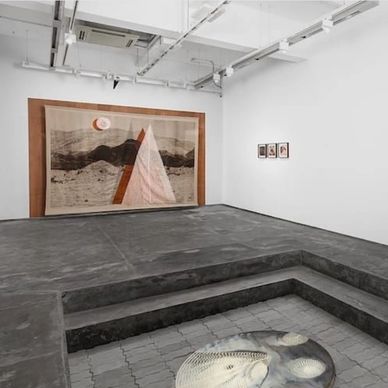
The inaugural Kolkata Art Weekender transformed the city into a vibrant cultural hub from 21–23 November 2025. Organized by Art Fervour, the event brought together galleries, museums, artists, workshops, heritage walks, film screenings, and open studios, creating Kolkata's first large-scale citywide contemporary art celebration.
Emami Art Exhibitions
Kafite Mahanayak Uttam Kumar Exhibition - 2025 (Sept 5)
Requrement of Rain water Harvesting, Baidyabati Municipality Area, Hooghly (10 Jun 2026)

Emami Art presented notable exhibitions including “a v a m ā n a v a” by Arindam Chatterjee and “IMAGINARIUM 5.0: The Promise of the Depth of Being.” The exhibitions featured emerging and established artists working across painting, sculpture, installation, video, and mixed media.
Requrement of Rain water Harvesting, Baidyabati Municipality Area, Hooghly (10 Jun 2026)
Suprime Court quantified the value of domestic care at ₹30,000 per month to women (Jun 14 2026)
Requrement of Rain water Harvesting, Baidyabati Municipality Area, Hooghly (10 Jun 2026)
The recurring waterlogging problem in several areas of Sheoraphuli and Baidyabati, particularly in localities such as Charabagan, has become a major civic concern. Civic body reclaims illegally-filled waterbodies. During periods of heavy rainfall, roads are often submerged for hours and sometimes days, causing inconvenience to residents, disrupting traffic, and posing health risks. Reports from Hooghly district have highlighted that Baidyabati and Sheoraphuli are among the urban areas affected by severe waterlogging, with residents pointing to outdated drainage infrastructure, inadequate sewer maintenance, and blocked drains as key causes.
As the civic authority responsible for drainage and sanitation services, Baidyabati Municipality should take proactive measures to address this challenge.
One of the most effective long-term solutions is the implementation of a comprehensive rainwater harvesting programme across municipal wards. Rainwater harvesting can reduce surface runoff, recharge groundwater, decrease pressure on stormwater drains, and help prevent flooding during intense monsoon showers. In addition, the municipality should undertake regular desilting of drains, remove encroachments and blockages from high drains, restore ponds and water bodies as natural reservoirs, and modernize the existing sewerage network. Preservation of local water bodies is particularly important for maintaining ecological balance and stormwater retention capacity.
A coordinated action plan involving municipal authorities, local residents, housing complexes, educational institutions, and market areas can significantly improve urban resilience. By investing in sustainable drainage systems and rainwater harvesting infrastructure, Baidyabati Municipality can transform waterlogging-prone areas such as Charabagan into safer, cleaner, and more environmentally sustainable neighbourhoods for future generations. Rainwater harvesting can significantly reduce stormwater runoff, recharge groundwater aquifers, improve water availability during dry months, and mitigate urban flooding. Studies conducted in urban areas of Hooghly district have demonstrated the feasibility and public willingness to adopt rooftop rainwater harvesting systems.
The municipality may consider:
- Mandatory rooftop rainwater harvesting in new buildings.
- Recharge pits and percolation wells in public spaces.
- Rain gardens and green corridors in low-lying areas.
- Harvesting systems in schools, markets, and government offices.
- Community awareness campaigns on water conservation.
By adopting a comprehensive rainwater harvesting strategy, Baidyabati Municipality can transform monsoon rain from a drainage burden into a valuable water resource, enhancing urban resilience, reducing waterlogging, and securing sustainable water supplies for future generations. Share our message with your community by hosting a presentation or speaking at an event. Our team is available to provide resources and support to help you spread awareness about the important work we do.
Suprime Court quantified the value of domestic care at ₹30,000 per month to women (Jun 14 2026)
Suprime Court quantified the value of domestic care at ₹30,000 per month to women (Jun 14 2026)
Suprime Court quantified the value of domestic care at ₹30,000 per month to women (Jun 14 2026)
The Supreme Court delivered multiple landmark rulings concerning women in mid-June 2026. This includes defining homemakers as "nation builders" and mandating strict action against sex-selection. These crucial legal developments were widely covered across major Indian publications like Dainik Jagran. Key Rulings & Observations
- Economic Value of Homemakers: The Supreme Court recognized housewives and homemakers as "nation builders." In a motor accident compensation case (Shishupal v. Surjeet), the Court quantified the value of domestic care at ₹30,000 per month.
Strict Action Against Sex Selection: Amid concerns over a skewed sex ratio, the Court ordered strict enforcement of the PCPNDT Act, 1994, citing systemic gender inequality and patriarchal "son preference". [1]
- Women in Law: The Court pushed for effective representation of women in State Bar Councils, noting that proposals to co-opt the highest-polling unsuccessful female candidates for the 10% quota are a "fair suggestion".
AI Centre of Excellence Opens in Kolkata ( 13 Jun 2026)
Suprime Court quantified the value of domestic care at ₹30,000 per month to women (Jun 14 2026)
Suprime Court quantified the value of domestic care at ₹30,000 per month to women (Jun 14 2026)
Tata Consultancy Services (TCS), in collaboration with Oracle, has launched India's first Oracle AI Data Platform Lab and Centre of Excellence (CoE) in Kolkata's Salt Lake Sector V, marking a significant step in the country's artificial intelligence and digital innovation ecosystem. The facility, located at Delta Park Lords, is designed to help businesses and public sector organizations accelerate AI adoption and data-driven decision-making.Tata Consultancy Services (TCS), in collaboration with Oracle, has launched India's first Oracle AI Data Platform Lab and Centre of Excellence (CoE) in Kolkata's Salt Lake Sector V, marking a significant step in the country's artificial intelligence and digital innovation ecosystem. The facility, located at Delta Park Lords, is designed to help businesses and public sector organizations accelerate AI adoption and data-driven decision-making.Tata Consultancy Services (TCS), in collaboration with Oracle, has launched India's first Oracle AI Data Platform Lab and Centre of Excellence (CoE) in Kolkata's Salt Lake Sector V, marking a significant step in the country's artificial intelligence and digital innovation ecosystem. The facility, located at Delta Park Lords, is designed to help businesses and public sector organizations accelerate AI adoption and data-driven decision-making.Tata Consultancy Services (TCS), in collaboration with Oracle, has launched India's first Oracle AI Data Platform Lab and Centre of Excellence (CoE) in Kolkata's Salt Lake Sector V, marking a significant step in the country's artificial intelligence and digital innovation ecosystem. The facility, located at Delta Park Lords, is designed to help businesses and public sector organizations accelerate AI adoption and data-driven decision-making.Tata Consultancy Services (TCS), in collaboration with Oracle, has launched India's first Oracle AI Data Platform Lab and Centre of Excellence (CoE) in Kolkata's Salt Lake Sector V, marking a significant step in the country's artificial intelligence and digital innovation ecosystem. The facility, located at Delta Park Lords, is designed to help businesses and public sector organizations accelerate AI adoption and data-driven decision-making.Tata Consultancy Services and Oracle Corporation have launched India's first Oracle AI Data Platform Lab and Centre of Excellence in Salt Lake Sector V, Kolkata. The facility aims to help industries, healthcare, finance, and government organizations adopt AI for better decision-making and digital transformation.ave launched India's first Oracle AI Data Platform Lab and Centre of Excellence in Salt Lake Sector V, Kolkata. The facility aims to help industries, healthcare, finance, and government organizations adopt AI for better decision-making and digital transformation.ave launched India's first Oracle AI Data Platform Lab and Centre of Excellence in Salt Lake Sector V, Kolkata. The facility aims to help industries, healthcare, finance, and government organizations adopt AI for better decision-making and digital transformation.ave launched India's first Oracle AI Data Platform Lab and Centre of Excellence in Salt Lake Sector V, Kolkata. The facility aims to help industries, healthcare, finance, and government organizations adopt AI for better decision-making and digital transformation.ave launched India's first Oracle AI Data Platform Lab and Centre of Excellence in Salt Lake Sector V, Kolkata. The facility aims to help industries, healthcare, finance, and government organizations adopt AI for better decision-making and digital transformation.200 words AI Centre of Excellence Opens in Kolkata
Tata Consultancy Services and Oracle Corporation have launched India's first Oracle AI Data Platform Lab and Centre of Excellence in Salt Lake Sector V, Kolkata. The facility aims to help industries, healthcare, finance, and government organizations adopt AI for better decision-making and digital transformation.
Local Scie
Tata Consultancy Services and Oracle Corporation have launched India's first Oracle AI Data Platform Lab and Centre of Excellence in Salt Lake Sector V, Kolkata. The facility aims to help industries, healthcare, finance, and government organizations adopt AI for better decision-making and digital transformation.
Social impact:
- AI skill development
- Employment generation
- Smart governance
- Data-driven public services
World and Indian Society
Another £100 million is taken out of the Strategic Priorities Grant (SPG) - 18 Jun 2026
Eco-Friendly Homes: What Zac Efron's Sustainable House Could Mean for India - 18 Jun 2026
Eco-Friendly Homes: What Zac Efron's Sustainable House Could Mean for India - 18 Jun 2026
Paraphrase the following:The UK government’s industrial strategy, published last year, bills itself as setting out “ambitious plans” for eight “high-growth” sectors. As you’d expect, life sciences, digital technology, clean energy and advanced manufacturing are in the mix – but so are the creative industries, which contribute £146 billion annually to the UK economy. The sector workforce is expected to grow by over 400,000 over the next decade, with many of these roles demanding higher-level qualifications. Programmes such as computer game development still face the occasional peril of being branded “Mickey Mouse” degrees; nothing could be further from the truth. But ministers’ backing for the sciences rarely extends as far as creative courses in higher education, as evidenced by a series of recent policy decisions. Creative disciplines are conspicuously absent from the list of priority subjects covered by England’s lifelong learning entitlement, and it seems likely that students on these programmes will also be excluded from eligibility for maintenance grants. Accelerated programmes – often in creative fields – and disciplines such as journalism lost their privileged status when English teaching funding was cut last year, and creative providers look to be squeezed harder when another £100 million is taken out of the Strategic Priorities Grant (SPG) next year. The backdrop to all of this is that creative courses are often offered by smaller, more specialist providers – just the type of institution that could be tipped over the edge by the ongoing financial crisis. Few campuses illustrate this more vividly than the experience of Goldsmiths, University of London, which in recent years has lurched from one round of cuts to another, inevitably accompanied by strike action and choice words from unions about how managers have run the place into the ground. Today we hear from David Oswell, the interim vice-chancellor, who puts the blame squarely on ministers, highlighting how Goldsmiths’ share of the SPG has shrunk by 80 per cent over the past six years. “To ensure the UK’s ongoing success in those industries, we need to be able to offer opportunity alongside innovation…But by neglecting to adequately fund the teaching half of our university, the government is undermining that pipeline,” Oswell writes, adding: “The stasis for higher education and the damage that is doing to the broader economy can only be resolved if the issue is brought back to the top of the political agenda.” The recriminations over Goldsmiths’ fate will no doubt continue, but few could argue with Oswell on this point. It is in the interest of students and universities – and the economy, as well – that ministers back up their stated support for the creative industries with action.
The UK government's industrial strategy, introduced last year, outlines ambitious plans to strengthen eight high-growth sectors of the economy. Alongside areas such as life sciences, digital technology, clean energy, and advanced manufacturing, the strategy recognises the creative industries as a key driver of economic growth, contributing around £146 billion annually to the national economy.
The creative sector is projected to create more than 400,000 additional jobs over the next decade, many of which will require advanced skills and higher education qualifications. Despite this, creative degree programmes, including fields like computer game development, continue to face unfair criticism as being "Mickey Mouse" courses, even though they demand significant technical and creative expertise. Moreover, while government support for science and technology education is strong, similar commitment to creative disciplines in higher education remains limited, as reflected in several recent policy decisions.
Creative subjects have been excluded from the priority areas covered by England's lifelong learning entitlement, and students pursuing these programmes may also miss out on maintenance grants. Funding reductions have already affected accelerated programmes, many of which are offered in creative fields, while subjects such as journalism have lost their previously protected status following cuts to teaching grants. The situation is expected to worsen as an additional £100 million is removed from the Strategic Priorities Grant (SPG), placing further financial pressure on institutions specialising in creative education.
These challenges are particularly significant because creative programmes are often delivered by smaller, specialist universities that are especially vulnerable to financial instability. The difficulties faced by Goldsmiths, University of London illustrate this problem. In recent years, the institution has experienced repeated budget cuts, staff redundancies, and industrial action, with trade unions criticising the management of the university.
According to interim vice-chancellor David Oswell, government policy is a major factor behind these difficulties. He notes that Goldsmiths' allocation from the Strategic Priorities Grant has declined by 80% over the past six years. Oswell argues that maintaining the UK's leadership in the creative industries requires continued investment in educational opportunities and innovation. He warns that inadequate funding for university teaching threatens the talent pipeline that supports these economically valuable sectors and suggests that the wider stagnation in higher education, along with its negative impact on the economy, can only be addressed by making the issue a political priority.
Although debates over the causes of Goldsmiths' financial problems are likely to continue, Oswell's central argument has broad relevance. Supporting the creative industries effectively requires the government to match its policy commitments with meaningful investment in creative higher education, benefiting students, universities, and the broader UK economy.
Eco-Friendly Homes: What Zac Efron's Sustainable House Could Mean for India - 18 Jun 2026
Eco-Friendly Homes: What Zac Efron's Sustainable House Could Mean for India - 18 Jun 2026
Eco-Friendly Homes: What Zac Efron's Sustainable House Could Mean for India - 18 Jun 2026
Hollywood actor Zac Efron is making headlines not for a new movie but for his ambitious eco-friendly home under construction in New South Wales, Australia. Named "FutureCave," the off-grid residence is being developed with environmental designer Joost Bakker and aims to demonstrate how natural materials can replace conventional, carbon-intensive building products. The house will incorporate hemp-based construction materials, recycled agricultural waste, green roofs, and bio-based interior products, while operating as a self-sustaining ecosystem. (People.com)
One of the most innovative aspects of the project is the use of hemp-derived building materials. Hemp blocks and hempcrete—a composite made from hemp fibres and lime—are lightweight, naturally insulating, breathable, and capable of storing carbon during their lifetime. The project also explores bio-based materials produced from agricultural waste and fungal mycelium, the root-like network of fungi. Around the world, researchers and architects are experimenting with mycelium bricks and composites that can be grown from organic waste, offering biodegradable alternatives to traditional construction materials. (Domain)
While Zac Efron's sustainable mansion may appear to be a celebrity luxury, its underlying concepts have significant relevance for India. The Indian construction industry is one of the largest contributors to greenhouse gas emissions due to the extensive use of cement, concrete, and fired clay bricks. At the same time, India generates enormous quantities of agricultural residues such as rice husk, wheat straw, sugarcane bagasse, coconut coir, and bamboo waste, many of which are either underutilised or burned, contributing to air pollution.
Eco-friendly construction materials could help address both challenges. Mycelium-based composites can potentially be produced using agricultural residues like rice husk, while hemp cultivation could provide raw materials for hempcrete, insulation panels, and biocomposites. India's Himalayan states, including Uttarakhand and Himachal Pradesh, along with parts of Madhya Pradesh and Uttar Pradesh, have favourable conditions for industrial hemp cultivation under regulated frameworks. Similarly, mushroom farming is already widespread across the country, creating opportunities for developing fungal biomaterials for sustainable construction.
Such innovations align with India's national priorities, including the Smart Cities Mission, affordable housing initiatives, and the commitment to achieve net-zero carbon emissions by 2070. Eco-friendly materials can improve thermal comfort in buildings, reduce energy consumption for cooling, and lower construction-related carbon emissions. In a tropical country where extreme heat is becoming a major challenge, naturally insulating materials such as hemp and mycelium could contribute to more climate-resilient housing.
Indian architects and researchers are already exploring sustainable alternatives, including bamboo structures, compressed earth blocks, fly ash bricks, and agricultural fibre composites. Integrating hemp-based and fungal biomaterials into this ecosystem could further diversify the country's sustainable construction sector. Rural housing schemes, eco-tourism projects, educational campuses, and disaster-resilient housing could become early adopters of these technologies.
However, challenges remain. Industrial-scale production, building code approvals, cost competitiveness, public awareness, and supply chain development need significant attention before these materials become mainstream. Research institutions, startups, and government agencies would need to collaborate to establish quality standards and demonstrate long-term performance under Indian climatic conditions.
Zac Efron's FutureCave is therefore more than a celebrity home project. It represents a growing global movement towards regenerative architecture that works with nature rather than against it. For India, where rapid urbanisation and environmental sustainability must go hand in hand, innovations such as hempcrete and mycelium bricks offer a glimpse into the future of green construction. By transforming agricultural waste and renewable crops into building materials, India could simultaneously reduce pollution, create rural livelihoods, and build healthier, more sustainable homes for future generations.
World and Indian Society
NASA's Black Hole Simulation Offers a Journey into the Unknown - 18 Jun 2026
Can Store-Bought Cheese Help Fight Antimicrobial Resistance? A New Discovery with Lessons for India
Can Store-Bought Cheese Help Fight Antimicrobial Resistance? A New Discovery with Lessons for India
The mysteries of black holes have fascinated scientists and the public alike for decades. Recently, NASA unveiled an extraordinary computer simulation that allows viewers to experience what it might be like to fall into a supermassive black hole. Developed using advanced supercomputing and Einstein's theory of General Relativity, the visualization takes audiences beyond the event horizon—the point of no return where gravity becomes so strong that not even light can escape. The simulation aims to transform complex astrophysical concepts into an immersive educational experience while helping researchers better understand some of the universe's most extreme environments. (arXiv)
The visualization presents two scenarios. In one, a spacecraft narrowly escapes the black hole's immense gravitational pull after orbiting around it. In the other, the spacecraft crosses the event horizon and continues its inevitable descent toward the singularity at the centre. Along the journey, viewers witness dramatic effects predicted by Einstein's theory, including gravitational lensing, the distortion of starlight, and the stretching of time itself. These simulations are not merely artistic creations but are based on sophisticated mathematical models and astronomical observations. (arXiv)
For India, NASA's achievement highlights the growing importance of scientific visualization and computational astrophysics. While black holes cannot be observed directly, scientists study them by analysing the radiation emitted by surrounding matter. India has already made significant contributions to this field through the Indian Space Research Organisation and its space observatories.
India's AstroSat has been studying black holes, neutron stars, and other high-energy cosmic phenomena since 2015. More recently, ISRO launched XPoSat, the country's first dedicated mission to investigate the polarization of X-rays emitted by black holes and other celestial objects. By examining the direction and intensity of these X-rays, scientists can gain valuable insights into the structure of black holes, their magnetic fields, and the behaviour of matter under extreme gravitational conditions. (Wikipedia)
Indian researchers are also making important contributions to global black hole science. Using data from AstroSat, scientists from Indian institutions, including ISRO and academic partners, have discovered unique X-ray flickering patterns from distant black holes, providing new clues about the dynamic processes occurring around these cosmic giants. Such discoveries reinforce India's growing role in international astrophysics research. (The Times of India)
NASA's black hole simulation also offers opportunities for Indian education and science communication. Immersive visualizations could be integrated into digital classrooms, science museums, and planetariums to make complex topics such as relativity, gravity, and cosmology more accessible to students. As India implements the National Education Policy (NEP 2020), experiential learning tools based on virtual and augmented reality could inspire a new generation of scientists and engineers.
Looking ahead, collaborations between NASA, ISRO, Indian universities, and private space technology startups could strengthen India's capabilities in computational astronomy, artificial intelligence for space science, and advanced visualization technologies. These skills have applications beyond astrophysics, including climate modelling, satellite data analysis, disaster management, and planetary exploration.
NASA's black hole simulation is therefore much more than a captivating digital experience. It demonstrates how cutting-edge computing can help humanity explore places that are physically unreachable. For India, it serves as both an educational resource and a reminder of the country's expanding role in space science. Through missions such as AstroSat and XPoSat, and with ISRO's ambitious future plans, India is increasingly contributing to humanity's quest to understand one of the universe's greatest mysteries—the black hole.
Can Store-Bought Cheese Help Fight Antimicrobial Resistance? A New Discovery with Lessons for India
Can Store-Bought Cheese Help Fight Antimicrobial Resistance? A New Discovery with Lessons for India
Can Store-Bought Cheese Help Fight Antimicrobial Resistance? A New Discovery with Lessons for India
Antimicrobial resistance (AMR) is often described as the "silent pandemic" of the 21st century. According to the World Health Organization, AMR occurs when bacteria, fungi, and other microbes evolve to resist the medicines designed to kill them, making common infections increasingly difficult to treat. India bears one of the world's highest burdens of antimicrobial resistance due to the overuse of antibiotics in healthcare, agriculture, and animal husbandry.
Interestingly, a recent scientific study suggests that an unlikely ally in this fight could be found in an everyday supermarket product—cheese. Researchers have discovered that certain store-bought cheeses contain beneficial microorganisms capable of producing natural antimicrobial compounds that can inhibit harmful bacteria and potentially reduce the spread of antibiotic resistance genes. Rather than acting as antibiotics themselves, these beneficial microbes compete with disease-causing bacteria and help maintain a healthier microbial ecosystem. (PubMed)
The idea may sound surprising, but fermented foods have been part of human diets for thousands of years. During the fermentation process, beneficial bacteria such as lactic acid bacteria produce substances known as bacteriocins, organic acids, and antimicrobial peptides. These compounds can suppress the growth of harmful microorganisms while promoting beneficial microbial communities. Scientists believe that such naturally occurring microbes could inspire the development of new probiotic therapies and food-based approaches to combat antimicrobial resistance. (PubMed)
However, there is an important social message that should not be overlooked. The study does not suggest that simply eating more cheese will cure infections or replace antibiotics. Instead, it highlights the importance of maintaining healthy microbial diversity through safe, nutritious, and properly processed fermented foods. At the same time, poor food hygiene and unsafe dairy practices can contribute to the spread of harmful bacteria and antimicrobial resistance, emphasizing the need for strict food safety standards. (Journal of Pure and Applied Microbiology)
The findings have particular significance for India. The country has a rich tradition of fermented dairy products such as dahi (curd), lassi, chhurpi, kalari cheese from Jammu and Kashmir, paneer-based fermented products, and numerous regional fermented foods. Indian scientists could investigate whether the beneficial microbes present in these traditional foods possess similar antimicrobial properties to those identified in commercial cheeses. Such research could open new opportunities for developing indigenous probiotics and functional foods tailored to local diets.
India's antimicrobial resistance challenge is substantial. The widespread availability of over-the-counter antibiotics, self-medication, incomplete treatment courses, and the routine use of antibiotics in livestock farming all contribute to the emergence of resistant bacteria. Food products can act as reservoirs for both beneficial and harmful microbes, making food safety and responsible antibiotic use essential components of the national strategy against AMR.
The findings also support India's "One Health" approach, which recognises that human health, animal health, and environmental health are interconnected. Reducing unnecessary antibiotic use in dairy farming, improving milk hygiene, promoting safe fermentation practices, and encouraging research into beneficial food microbes could collectively help reduce the spread of resistant bacteria.
From a public awareness perspective, the study offers several practical lessons:
• Consume properly processed and hygienically prepared fermented foods.
• Avoid self-medication and unnecessary antibiotic use.
• Complete prescribed antibiotic courses as directed by healthcare professionals.
• Support responsible antibiotic practices in agriculture and livestock production.
• Maintain good food hygiene and refrigeration practices.
• Encourage research into traditional Indian fermented foods as potential sources of beneficial microbes.
Indian research organisations such as the Indian Council of Medical Research, Council of Scientific and Industrial Research, and the Indian Council of Agricultural Research could play a leading role in studying indigenous fermented foods and their potential contribution to combating antimicrobial resistance.
The larger takeaway from this research is that the fight against antimicrobial resistance extends far beyond hospitals and pharmaceutical laboratories. Everyday foods, healthy microbial ecosystems, responsible farming practices, and informed consumer choices may all become part of the solution. For India, a country with a rich heritage of fermented foods and a pressing AMR challenge, this research serves as a reminder that traditional dietary practices, supported by modern science, could contribute to building a healthier and more resilient society.